
When you’re new to riding, there’s something no one quite prepares you for: just how many things your body is doing at once.
You’re steering with your hands, posting with your seat, trying to keep your heels down, all while listening for the instructor yelling, “More leg! Outside rein! Sit tall!”
It’s a lot.
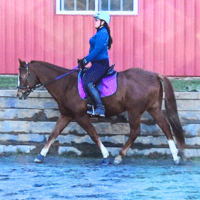
So today, I want to slow everything down and walk you through the basic aids of English riding—what they are, how they work, and how to start feeling them in your own body. I don’t want you just memorizing cues. I want you to understand your aids and use them clearly—like a language between you and your horse.
Think of this as a personal riding lesson. We’re standing in the arena together. You’re on your horse, maybe adjusting your stirrups or taking a deep breath before your warm-up. And I’m next to you saying, “Let’s start at the beginning—because this part is what makes everything else work.”
What Are the Aids?
In horseback riding, your aids are the ways you communicate with your horse.
We group them into four main types:
- Leg aids
- Seat aids
- Rein (or hand) aids
- Voice aids
These are your basic controls—your natural aids. They come from your body and are used in nearly every ride, often all at once. They help you ask your horse to go forward, slow down, turn, bend, transition, change pace, and stay balanced.
But here’s the key I wish more riders knew: it’s not just about using the aid—it’s about using the right aid at the right time with the right feel.
There are also artificial aids, like crops, spurs, and whips. These are tools meant to reinforce your natural aids—but they should never replace them. We’re not covering artificial aids in this post, but we’ll talk about them in an upcoming article: what they are, when they’re appropriate, how to introduce them, and most importantly—how to use them ethically and thoughtfully.
For now, let’s focus on building a strong foundation with your natural aids—because everything else builds on this.
1. Your Legs: The Gas Pedal and the Guiding Rails
Your legs ask the horse to move forward, bend, stay straight, or move sideways.
But there’s a huge difference between gripping, nagging, or kicking… and using your legs with purpose.
How to Use Your Legs Effectively:
- Your calves should lie lightly against the horse’s sides, not clamping or floating off.
- To ask for forward, close your calves gently, evenly. If there’s no response, back it up with a stronger aid, but always return to quiet legs.
- To bend, your inside leg stays at the girth to ask for the bend. Your outside leg shifts just behind the girth to guide the body and prevent the haunches from swinging out.
- For lateral movements, both legs work in coordinated timing depending on what you’re asking (we’ll save full lateral aids for another day).
What I see in lessons: Many riders keep their legs too far off the horse, use them in big, random bursts or are too noisy with there legs using them constantly. The goal is clarity, not surprise, not constant pressure. Your horse should feel your leg and know what you mean without flinching or ignoring.
2. Your Seat: The Invisible Aid
Your seat is your most powerful—and most underused—aids.
It can tell your horse:
- “Slow down.”
- “Step up into this transition.”
- “Stay round and connected.”
- Or even just, “Relax. I’m with you.”
But you have to feel it. Not sit passively like a passenger, or sack of potatoes. And you’re never going to feel it if you are stiff and bouncing all over the place.
How to Use Your Seat Effectively:
- Sit evenly on both seat bones—no tipping or collapsing.
- Let your hips move with the horse’s motion, especially at the walk and trot.
- To ask for a halt or downward transition, slightly tighten your core, deepen your seat, and stop following the motion.
- To ask for more energy or upward transitions, allow your hips to swing more, matching the rhythm you’re asking for.
Try this in the saddle:
At the walk, exaggerate your seat motion for two steps, then freeze your seat. Feel how your horse slows down slightly or wonders, “Wait—what changed?” That’s the influence of your seat.
3. Your Hands: The Conversation
Your hands connect to the horse’s mouth through the reins—and this is where a lot of riders accidentally get loud.
Hands should never pull, jerk, grip or “force” the horse in place. They should follow the motion, give when the horse gives, and quietly guide. Just a quick side note: an emergency situation is different than working on riding in harmony with the horse. There is an emergency pully rein which we will discuss in another article when you would pull on a rein and hold. But for now we are talking about everyday riding and working on using your hands effectively and kindly.
How to Use Your Hands Effectively:
- Keep a straight line from bit to elbow, with soft, upright hands and thumbs on top.
- To ask for a halt or slow down, close your fingers and resist slightly, as if you’re closing a zipper.
- To steer, use an opening rein (leading hand slightly to the side) with supporting inside leg, not just a pull to the outside. This is the most ideal for new or novice riders. There are other ways to steer such as direct rein, indirect rein which we will discuss another time.
- To soften or reward, gently open your fingers or move your hands forward an inch—this is called a “give.”
Instructor tip I give in every lesson:
If your reins are too short, your elbows straighten and your hands lose their feel. If they’re too long, you lose connection. Find that neutral point where your elbows are bent, and your hands feel like they’re “listening.”
4. Your Voice: The Forgotten Aid
Yes, you can use your voice in English riding—and many horses respond beautifully to it. But you need to know what the horse is trained to know as far as voice commands.
Some of the voice cues I may use:
- Encourage Forward (“Walk on,” or “Trot on” or clucking noise)
- Calm (“Easy…” or let out a drawn out breath)
- Praise (“Good girl,” or “Good boy,” drawn out and positive)
- Warn (“Hey” in a slow, low and firm tone)
I would also sometimes use voice commands for the different gaits such as for walk, trot, canter and halt. With upward transitions my tone of voice will be more energetic, short and higher pitched and with downward transitions my tone would be calmer, drawn out and lower.
I find that voice aids are useful when a horse gets confused about what you are asking, to add more clarity or such as when you are working with a greener horse or a beginner rider. Not that it should take precedent over learning to apply the aids properly, it is merely a supplement to the other aids.
Voice aids work best when they’re consistent, calm, and paired with physical aids. Your horse doesn’t speak English, but they understand your tone and timing.
How All the Aids Work Together
This is where the magic happens.
Let’s say you want to ask for a trot from walk.
You could:
- Lightly close your calves (leg aid)
- Allow your seat to follow a more active rhythm (seat aid)
- Keep a soft, steady contact, that allows the horse forward (rein aid)
- And add a cluck or a verbal “Trot on” (voice aid)
All of those signals combine into one clear request.
That’s what riding with feel means. It’s not “which aid do I use?”—it’s how do I use all of them together to say one thing clearly?
The Real Goal: Invisible Aids
When your horse understands your aids, you start using less. Not more.
The ultimate goal is to look like you’re doing nothing, while in reality your whole body is riding—your legs guiding, your seat supporting, your hands listening, your voice encouraging.
It takes practice. It takes patience. But that’s where true connection starts.
Try This in Your Next Ride:
Here’s your mini riding assignment:
- At the walk, try a halt using only your seat and voice. Don’t pull the reins.
- Ask for trot using your seat and leg. Let your hands simply go with the motion.
- Ride a 20-meter circle and practice steering with your leg and an opening rein, not just the inside hand alone.
- Praise your horse with your voice when they respond softly.
Start tuning into how all your aids feel—and how your horse answers. That’s how you build trust. That’s how you ride joyfully.
Have questions about using your aids or want help troubleshooting a sticky transition or steering issue? I love helping riders simplify and connect the dots. Leave a comment below or send me a message.
Ride joyfully,
Kacey